
Your Customer Bought Once. Now What? A QR-Powered Strategy for Repeat Purchases
Turn packaging, tags, labels and insert cards into a repeat-purchase channel — a five-step QR-powered post-purchase journey from scan to landing page, lead capture, email retargeting and measurement.
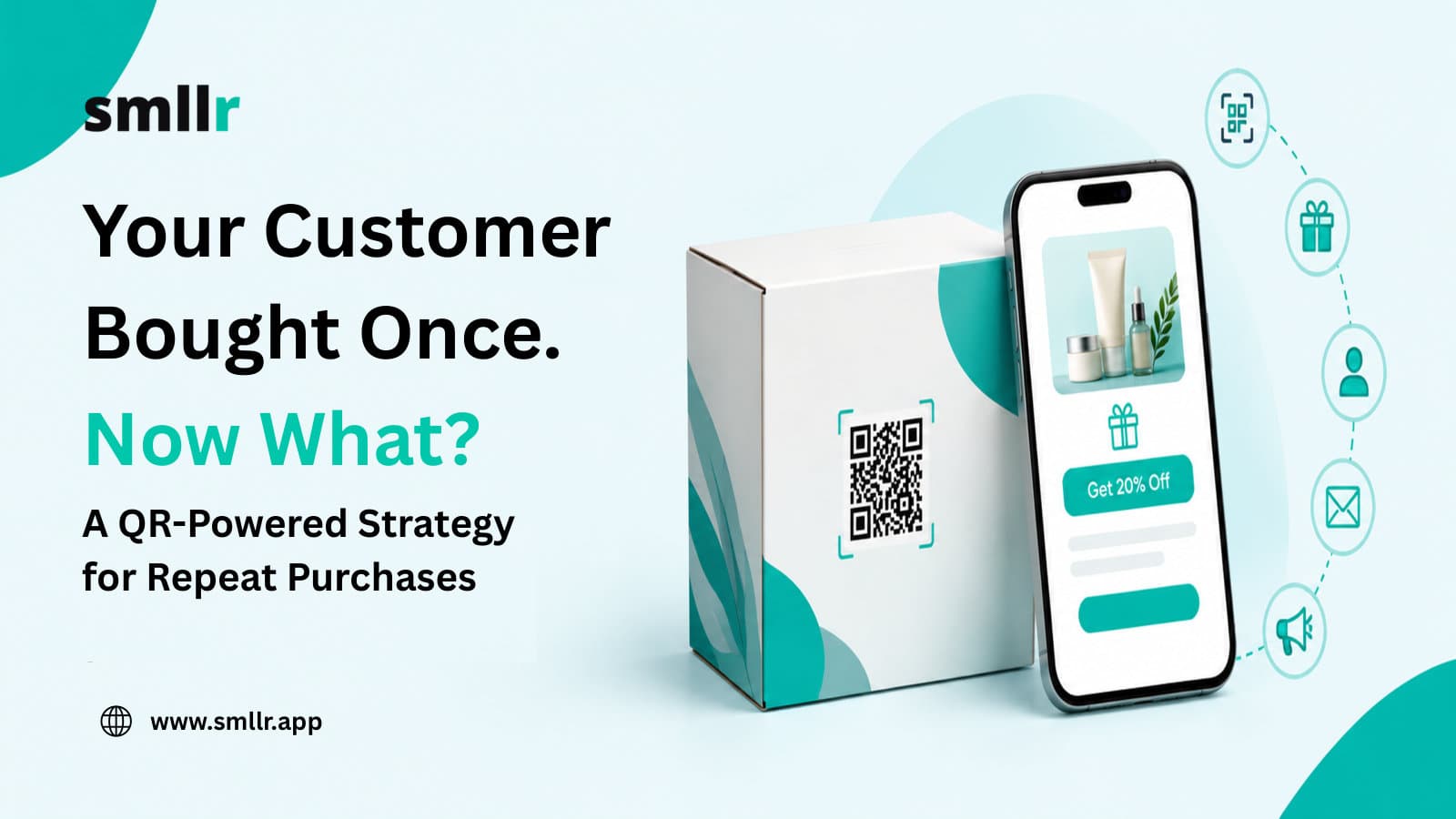
What Happens After the First Purchase?
Every business is glad to win a new customer. But what happens after that first purchase?
A customer finds your product, buys from your brand, and moves on. You might never hear from them again. Finding new customers matters, but motivating existing customers to come back is how you build relationships and grow a business sustainably.
The problem is that most businesses focus on making the sale and neglect what comes after it. Product packaging, tags, labels, shopping bags and thank-you cards usually become forgotten marketing tools the moment the sale is complete.
What if those items could become the starting point for your customer's next purchase? QR-powered marketing makes that possible.
Why Repeat Purchases Matter
Selling to someone once does not mean they will remember your brand when they need the same item again. Customers have endless choices, and if they have no reason to come back to you, they will go to someone else.
Repeat buying lets a brand get to know its customers and build a relationship with them. But customers need more than promotional material — they need meaningful interactions with the brand.
This is where post-purchase marketing comes in. Instead of treating the package as the end of customer engagement, treat it as another chance to interact.
Turn Your Packaging Into a Marketing Channel
Your packaging travels straight into your customer's hands, which makes it one of the best opportunities you have to re-engage them after the purchase.
By placing a QR code on packaging, tags, labels, insert cards and shopping bags, you can invite customers to take the next step with a single scan. Depending on your campaign goals, the QR code can send customers to:
- A discount on their next purchase
- A landing page for complementary products
- A rewards or loyalty programme
- A registration page
- Seasonal discounts and promotions
- A newsletter subscription
For example, a skincare brand can put a QR code on its packaging that leads to a next-purchase discount page. A fashion brand can use its tags to show off a new collection, while a food brand can use the code to share recipes and suggest complementary products.
Build a QR-Powered Repeat Purchase Journey
A QR code becomes far more useful when it sits inside a carefully planned customer journey rather than simply linking to your website. Here is how to plan that journey:
Step 1: Generate interest with the QR code. Put a dynamic QR code on the packaging, insert, label or any other offline media, with a clear call to action such as "Scan to Get an Offer on Your Next Order" or "Get Your Exclusive Reward Now".
Step 2: Send scanners to a matching landing page. Once scanned, the customer should land on a page that matches the message on the package. Keep the experience quick and convenient.
Step 3: Engage customers and collect contacts. Give customers a reason to act, such as subscribing for updates or joining a reward scheme. With their consent, this contact information powers your future marketing campaigns.
Step 4: Retarget customers with relevant email promotions. Use what you know about customers to personalise targeted email campaigns. For instance, customers interested in a particular product category should hear about new and relevant products in that category.
Step 5: Measure campaign performance. Track QR code scans and landing page engagement to see what works for your customers, then use what you learn to sharpen your messaging and offers.
Followed this way, a simple QR code becomes a valuable marketing tool.
Why Dynamic QR Codes Make the Strategy More Flexible
A static QR code points to one fixed destination. If the promotion ends or the page moves, updating it means reprinting the packaging.
Dynamic QR codes are far more adaptable: you can change where the code points without reprinting it. Suppose you run a special holiday offer in October and a new product campaign in November — the same QR code already printed on your packaging can send customers to the new destination.
Combined with scan analytics, this also helps you understand customer behaviour over time, campaign by campaign.
How SMLLR Helps Brands Encourage Repeat Purchases
SMLLR lets brands turn offline touchpoints — packaging, tags, brochures, labels and other printed media — into digital marketing journeys. Together, dynamic QR codes, landing pages, lead capture, scan analytics, email campaigns and Meta Sync connect offline customer engagement to digital marketing:
- Dynamic QR codes with scan analytics — from the Starter plan (₹499/month)
- Landing Pages that match the offer printed on the pack — Pro plan (₹4,999/month)
- Lead Hub to capture consented customer contacts from each scan — Pro plan
- Email Marketing to send targeted follow-up campaigns to those leads — Pro plan
- Meta Sync to build Meta audiences from qualifying leads for retargeting — Pro plan
You can build campaigns that invite customers to explore your offers and share their contact details, then stay in touch through the right channels. Meta Sync helps connect qualifying customer data to Meta for audience building and retargeting, where applicable.
Instead of only counting products sold, brands get to see what happens after the transaction — and how to bring customers back.
Turn the First Purchase Into the Next Opportunity
Your customer already knows your brand and has tried your product. All they need now is a good reason to come back.
By combining QR codes, relevant landing pages, attractive offers and timely communication, you can make your post-sale marketing more engaging and measurable. The opportunity is already in your customer's hands — on your product or packed alongside it.
Ready to use QR codes to encourage repeat purchases? Create your QR code on SMLLR and turn that touchpoint into a new customer journey.
Related Reading
Frequently Asked Questions
How can a QR code on packaging drive repeat purchases?
A QR code on packaging, tags, labels or insert cards invites the customer to take a next step after buying — claiming a next-order discount, joining a loyalty programme, or exploring complementary products. When it leads to a matching landing page that captures their contact details with consent, you can follow up with targeted offers that bring them back.
What should a post-purchase QR code link to?
Something that matches the message printed on the pack: a next-purchase discount, a complementary-products page, a rewards or loyalty programme, a registration page, seasonal promotions, or a newsletter sign-up.
Why use a dynamic QR code instead of a static one on packaging?
A static code is fixed to one destination, so changing the offer means reprinting the packaging. A dynamic code can be pointed at a new destination at any time — an October holiday offer and a November product launch can share the same printed code — and it records scan analytics.
Which SMLLR plan do I need for this repeat-purchase journey?
Dynamic QR codes with scan analytics are available from the Starter plan (₹499/month). The full journey — Landing Pages, Lead Hub contact capture, Email Marketing and Meta Sync — is on the Pro plan (₹4,999/month) and above.
How do I measure whether a packaging QR campaign is working?
Track QR code scans and landing page engagement, then compare how many scanners became leads and responded to your follow-up campaigns. Use what you learn to refine the call to action and the offer.